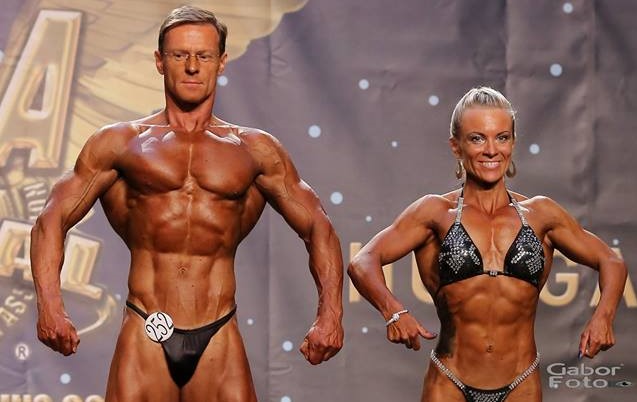
The Get Big Workout
"The Pump: A commonly used bodybuilding term. 'The pump' occurs when
your muscles swell up beyond their normal size by a considerable
amount. Looking at yourself in the mirror, you will look bigger, and
likely show appear more vascular and defined as well as being more
confident in yourself. A good pump can be felt and noticed for a long
time after workout if done properly. Oxygen and nutrients will
continually to be brought into the area being exercised during intense
weight training activity. Blood is forced into the area being exercised
but not drawn out. This extra blood stays in there for some period,
causing it to swell and appear noticeably bigger."
Our new "Muscle Pumping" training and supplementation program is getting
amazing results with all that have tried it. These are the best results
in terms of fat free muscle gains, that we have ever witnessed in so
short a time.
Even the slowest of slow gainers are getting big on this program, and
they are getting ripped too, because they are gaining lean body mass!
And their strength gains were just as impressive, literally going
through the roof!
How does it all work? Well, let me fill you in.
The Training
First and most importantly there is the training program, this routine
is a serious program that will increase your strength by leaps and
bounds. And it will also give you size gains like you have never seen,
the pumps you will get will make you feel like your muscles are going
to burst.
The theory behind it being that to get the most out of your workout,
you have to stimulate both the slow and fast twitch muscle fibers in
your body. This routine will force your body to new growth by using
low and high reps - first you add weight each set and work down to a
heavy weight for 6 reps then finish off with a lighter weight for 20
reps. The idea is to use heavy weights to stimulate size and muscularity
while the sets of 20 reps create a huge pump and help build blood
vessels. Rest should only be about 60 seconds between sets, just
enough to change the weight.
This is an every other day split routine - Workout A first day, rest
day two, Workout B the third day, rest on day four, Workout A day five
and so on.
Workout A
Legs, Chest and Biceps
Squats 10-8-6-20 reps
Leg Extentions 10-8-6-20 reps
Leg curls 10-8-6-20 reps
Calf raises 10-8-6-20 reps
Incline dumbell press 10-8-6-20 reps
Flat flys 10-8-6-20 reps
Dips 10-8-6-20 reps
Barbell curls 10-8-6-20 reps
Hammer Curls 10-8-6-20 reps
Workout B
Back, Shoulder and Triceps
Barbell row 10-8-6-20 reps
Lat pulldowns 10-8-6-20 reps
Shoulder press 10-8-6-20 reps
Lateral raises 10-8-6-20 reps
Bent over lateral raises 10-8-6-20 reps
Over head tricep extensions 10-8-6-20 reps
Tricep kickbacks 10-8-6-20 reps
The Supplements
Supplement 1: Pumped Extreme - See http://www.trulyhuge.com/creatine.htm
Supplement 2: Nitrobol - See http://www.trulyhuge.com/nitrobol.htm
After a 2 weeks taking these supplements, and following the training routine,
your muscles will feel like they are going to explode, you'll be so pumped
after your workout that you'll have trouble moving and veins will be popping
out all over!
This program could change your life forever, we strongly urge you to seize
this chance to make your best gains ever over the next 8 weeks.
Lose Fat, Gain Muscle, Shape Up. Sign up for our Free Weekly Bodybuilding,
Fitness and Health Tips Newsletter, and you will be automatically entered
in our monthly drawing to win Free Supplements and other great prizes.
Stay informed, stay motivated, win free stuff, join today!
Click Here To Sign Up Free
Tuesday, November 25, 2008
Tuesday, November 18, 2008
My Best Workout For Size and Strength
By Matt Talbott
I am a 28 year old lifter who has spent the last 10
years trying everything from pure body shaping routines
to traditional strength related programs, including
extensive work with heavy, awkward objects for all-around
functional strength.
One of the best programs I've found for size and strength
is to train on Mondays, Wednesdays, and Fridays for 30 minutes
on 8 exercises:
1x10 (no gear or belt unless poor back requires support)
Full back squat
Bench press
Deadlift
Standing military press
Chin up
Parallel dip
Standing barbell curl
Lying barbell triceps extention
I stand 6 feet tall and weigh 250 lbs. solid with confident
size and strength. I want to add that the 20 rep squat
workouts are great for those who can maintain the
necessary motivation to follow through on the required
workouts.
(Milk, peanut-butter, and eggs are the best
foods to eat for ensuring faster recuperations and
pre-workout energy).
Lose Fat, Gain Muscle, Shape Up. Sign up for our Free Weekly Bodybuilding,
Fitness and Health Tips Newsletter, and you will be automatically entered
in our monthly drawing to win Free Supplements and other great prizes.
Stay informed, stay motivated, win free stuff, join today!
Click Here To Sign Up Free
By Matt Talbott
I am a 28 year old lifter who has spent the last 10
years trying everything from pure body shaping routines
to traditional strength related programs, including
extensive work with heavy, awkward objects for all-around
functional strength.
One of the best programs I've found for size and strength
is to train on Mondays, Wednesdays, and Fridays for 30 minutes
on 8 exercises:
1x10 (no gear or belt unless poor back requires support)
Full back squat
Bench press
Deadlift
Standing military press
Chin up
Parallel dip
Standing barbell curl
Lying barbell triceps extention
I stand 6 feet tall and weigh 250 lbs. solid with confident
size and strength. I want to add that the 20 rep squat
workouts are great for those who can maintain the
necessary motivation to follow through on the required
workouts.
(Milk, peanut-butter, and eggs are the best
foods to eat for ensuring faster recuperations and
pre-workout energy).
Lose Fat, Gain Muscle, Shape Up. Sign up for our Free Weekly Bodybuilding,
Fitness and Health Tips Newsletter, and you will be automatically entered
in our monthly drawing to win Free Supplements and other great prizes.
Stay informed, stay motivated, win free stuff, join today!
Click Here To Sign Up Free
Friday, November 14, 2008
GENERATION RX
Common Radius Films is a private documentary and media development company based in Vancouver, British Columbia. GENERATION RX marks the first film partnership between the company and international award-winning writer/producer/director Kevin P. Miller. This film explores how children have been caught in the middle of an unprecedented change in Western culture: that of drugging children with psychiatric medications earlier — and more often than ever before.
GENERATION RX has already garnered the support of some of the most respected names in Hollywood, including writer/director Paul Haggis, who won back-to-back Academy Awards for "Million Dollar Baby," and "Crash." GENERATION RX, Mr. Haggis said, "is a powerful and often chilling eye-opener. Weeks after viewing, the stories continue to haunt me."
GENERATION RX is scheduled for release in 2008.
Common Radius Films is a private documentary and media development company based in Vancouver, British Columbia. GENERATION RX marks the first film partnership between the company and international award-winning writer/producer/director Kevin P. Miller. This film explores how children have been caught in the middle of an unprecedented change in Western culture: that of drugging children with psychiatric medications earlier — and more often than ever before.
GENERATION RX has already garnered the support of some of the most respected names in Hollywood, including writer/director Paul Haggis, who won back-to-back Academy Awards for "Million Dollar Baby," and "Crash." GENERATION RX, Mr. Haggis said, "is a powerful and often chilling eye-opener. Weeks after viewing, the stories continue to haunt me."
GENERATION RX is scheduled for release in 2008.
Thursday, November 13, 2008
Bicep Building Tips
By Justin Keyser
Here's something I've been experiencing phenomenal success with
in regard to bicep growth.
I am a believer that dumbbells offer the greatest benefit than
any other tool in the bodybuilding arsenal for enlarging and
strengthening the biceps. The reason being is that one of the
major functions of the biceps is rotation of the wrist; an
impossibility with a barbell. This is not to suggest that
barbell work is unnecessary, merely that in order to fully
activate the biceps and in particular the biceps bracchialis,
flexion of the wrist is absolutely needed.
I also have noted the most muscular growth occurs in the biceps
when a free-range movement is implemented. (As opposed to a
preacher bench type of restricted movement). This being stated,
I have devised a way of performing dumbbell curls in which I
regularly achieve a massive pump and ever-increasing strength
in each workout.
Sit on a bench designed for behind-the-neck presses which
preferably has an elevated foot support. Grasp a dumbbell in
one hand and with the other, grasp the barbell support bar.
Bracing with the support arm, lean slightly in the direction
of the working arm, making sure to keep the arm close to, but
not touching, the torso.
At a moderate tempo, forcefully curl the DB upward and outward,
with the pinky higher than the thumb. Keep the wrist relaxed
throughout the curl and squeeze the muscle with everything
you've got at the top.
Control the negative! This is perhaps the most important part.
It's the stress of eccentric portions of any movement that
contribute to the lion's share of growth. No swinging the
w eight around. The w eight you use is not as important as
the perceived stress the muscle receives.
After doing one arm switch to the other and repeat the
sequence. My suggestion is one relatively light set to
prepare the arms for the torture of the real work. By
"real work" I'm not talking about a marathon of sets-just
enough to stimulate the muscle. Do your warmup and immediately
perform a heavy set to failure-assisting with the bracing hand
at the point of being physically incapable of another clean
rep. Not just when discomfort sets in.
At the next workout, which should be a full week later, try
to increase either your rep count with the same w eight or
to increase poundages by 2 or 3 p ounds.
That's it for now. Stay tough!
Lose Fat, Gain Muscle, Shape Up. Sign up for our Free Weekly Bodybuilding,
Fitness and Health Tips Newsletter, and you will be automatically entered
in our monthly drawing to win Free Supplements and other great prizes.
Stay informed, stay motivated, win free stuff, join today!
Click Here To Sign Up Free
By Justin Keyser
Here's something I've been experiencing phenomenal success with
in regard to bicep growth.
I am a believer that dumbbells offer the greatest benefit than
any other tool in the bodybuilding arsenal for enlarging and
strengthening the biceps. The reason being is that one of the
major functions of the biceps is rotation of the wrist; an
impossibility with a barbell. This is not to suggest that
barbell work is unnecessary, merely that in order to fully
activate the biceps and in particular the biceps bracchialis,
flexion of the wrist is absolutely needed.
I also have noted the most muscular growth occurs in the biceps
when a free-range movement is implemented. (As opposed to a
preacher bench type of restricted movement). This being stated,
I have devised a way of performing dumbbell curls in which I
regularly achieve a massive pump and ever-increasing strength
in each workout.
Sit on a bench designed for behind-the-neck presses which
preferably has an elevated foot support. Grasp a dumbbell in
one hand and with the other, grasp the barbell support bar.
Bracing with the support arm, lean slightly in the direction
of the working arm, making sure to keep the arm close to, but
not touching, the torso.
At a moderate tempo, forcefully curl the DB upward and outward,
with the pinky higher than the thumb. Keep the wrist relaxed
throughout the curl and squeeze the muscle with everything
you've got at the top.
Control the negative! This is perhaps the most important part.
It's the stress of eccentric portions of any movement that
contribute to the lion's share of growth. No swinging the
w eight around. The w eight you use is not as important as
the perceived stress the muscle receives.
After doing one arm switch to the other and repeat the
sequence. My suggestion is one relatively light set to
prepare the arms for the torture of the real work. By
"real work" I'm not talking about a marathon of sets-just
enough to stimulate the muscle. Do your warmup and immediately
perform a heavy set to failure-assisting with the bracing hand
at the point of being physically incapable of another clean
rep. Not just when discomfort sets in.
At the next workout, which should be a full week later, try
to increase either your rep count with the same w eight or
to increase poundages by 2 or 3 p ounds.
That's it for now. Stay tough!
Lose Fat, Gain Muscle, Shape Up. Sign up for our Free Weekly Bodybuilding,
Fitness and Health Tips Newsletter, and you will be automatically entered
in our monthly drawing to win Free Supplements and other great prizes.
Stay informed, stay motivated, win free stuff, join today!
Click Here To Sign Up Free
Tuesday, November 04, 2008
Do You Suffer Lower Back Soreness After Squats?
by John O'Neill, Australia
Squats are unquestionably a great way to train legs (and a
lot else), but a lot of people seem to suffer low back
soreness, even after warming up and using correct
technique. Personally, I used to have mild low back
soreness for days after doing heavy squats
(incidentally, by heavy I mean what is heavy to you). This
unfortunately means many people will avoid squats
altogether.
A few months ago I changed my entire routine, and now
no longer suffer any back soreness - in fact my lower
back has never felt better. The trick seems to be training
lower back directly after upper legs. My gut feeling is
that the Leg Curls are also useful though. The routine I
am using for my upper leg/lower back day is:
* Squats (2 sets x 10-12)
* Leg Extensions (2 sets x 10)
* Leg Curls (2 sets x 10)
* Hyperextensions (2 sets x 10-15)
* Seated Good Mornings (2 sets x 10-15)
By necessity I train at home alone so am limited in what
exercises I can choose. Just vary the routine I have given
above to fit it with your own circumstances and routine. I
also warmup/stretch before the workout, and do a bit of
stretching/warmdown afterwards, especially for lower
back.
In case you're wondering, I do the Hyperextensions off
the end of a standard bench press bench, gripping around
the bench with my legs and using a towel to help pad it for
my inner thighs. I hold a light weight across my chest to
help add resistance (currently only about 20lbs), and
would be wary about going too much heavier.
The Seated Good Mornings I do on a normal chair, but
they could also be done off the side or end of a bench.
Extend your upper body right down between your
spread legs, keeping back straight and head up. In
fact this is virtually a stretching movement, but again
I use a light weight held across my chest (currently
35lbs). Again I would be wary about trying to 'go heavy'
in this movement.
Just a word of warning. If you do now, or after trying
this routine, continue to suffer low back soreness from
squats or any other exercise, please get your technique
checked by someone that knows how it should be done.
It's not worth wrecking your back.
Lose Fat, Gain Muscle, Shape Up. Sign up for our Free Weekly Bodybuilding,
Fitness and Health Tips Newsletter, and you will be automatically entered
in our monthly drawing to win Free Supplements and other great prizes.
Stay informed, stay motivated, win free stuff, join today!
Click Here To Sign Up Free
by John O'Neill, Australia
Squats are unquestionably a great way to train legs (and a
lot else), but a lot of people seem to suffer low back
soreness, even after warming up and using correct
technique. Personally, I used to have mild low back
soreness for days after doing heavy squats
(incidentally, by heavy I mean what is heavy to you). This
unfortunately means many people will avoid squats
altogether.
A few months ago I changed my entire routine, and now
no longer suffer any back soreness - in fact my lower
back has never felt better. The trick seems to be training
lower back directly after upper legs. My gut feeling is
that the Leg Curls are also useful though. The routine I
am using for my upper leg/lower back day is:
* Squats (2 sets x 10-12)
* Leg Extensions (2 sets x 10)
* Leg Curls (2 sets x 10)
* Hyperextensions (2 sets x 10-15)
* Seated Good Mornings (2 sets x 10-15)
By necessity I train at home alone so am limited in what
exercises I can choose. Just vary the routine I have given
above to fit it with your own circumstances and routine. I
also warmup/stretch before the workout, and do a bit of
stretching/warmdown afterwards, especially for lower
back.
In case you're wondering, I do the Hyperextensions off
the end of a standard bench press bench, gripping around
the bench with my legs and using a towel to help pad it for
my inner thighs. I hold a light weight across my chest to
help add resistance (currently only about 20lbs), and
would be wary about going too much heavier.
The Seated Good Mornings I do on a normal chair, but
they could also be done off the side or end of a bench.
Extend your upper body right down between your
spread legs, keeping back straight and head up. In
fact this is virtually a stretching movement, but again
I use a light weight held across my chest (currently
35lbs). Again I would be wary about trying to 'go heavy'
in this movement.
Just a word of warning. If you do now, or after trying
this routine, continue to suffer low back soreness from
squats or any other exercise, please get your technique
checked by someone that knows how it should be done.
It's not worth wrecking your back.
Lose Fat, Gain Muscle, Shape Up. Sign up for our Free Weekly Bodybuilding,
Fitness and Health Tips Newsletter, and you will be automatically entered
in our monthly drawing to win Free Supplements and other great prizes.
Stay informed, stay motivated, win free stuff, join today!
Click Here To Sign Up Free
Tuesday, October 21, 2008
Solve Your Underweight Problem This Weight Gain Workout Routine!
by Kiwi Guy
After seeing so many problem underweight people searching for
weight gains, I decided to put finger to key board and write this
article. The funny thing is its so basic and straight forward, yet
IT WORKS!
The plan is easy:
1 - write down the weights you currently use in the big exercises
for reps. ( As a little side issue ask yourself what weights were
you using 3 months ago? Starting to get the picture!)
2 - Ask yourself what weights you would have to be using to
notice an improvement in your physique. However be
realistic. Sure we all know that benching 200 pounds more
would make one heck of an improvement, but could you really
increase it by that much!?!?!? Maybe you could but if your
natural it would take at least 2 years and even then thats
very exceptional. The secret is to set realistic short term
goals. A good period of time is 12 weeks.
Work out only 3 times a week, i.e. Mon, Wed, Fri. You get
plenty of rest this way. Remember you GROW when you
REST.
Limit the exercises you do to ONLY the MAIN exercises.
You cant add 50 pounds to exercises like concentration
curls, laterals etc. Also limit the amount of work you do
for each exercise. Three to five sets TOTAL is, despite
the many who will disagree, enough. It could even
be TOO much. Tell me you people who disagree, how
much have you improved on your exercise weights
lately?
My Weight Gain Workout was as follows:
Monday
Bench Press 3 heavy 2 lighter sets
Milartary presses 2 heavy sets 1 pumping set
Dumbell Tricep two hand extensions 1 heavy and 1 light set
Wednesday
Bent over barbell row 4 medium to heavy sets 6 - 8 reps per set
Barbell curls 3 sets about 5 reps per set only
Friday
Squats - For these I lowered the reps to about 5 for 5 sets.
Stiff legged dead lift 3 sets (these were dropped at about week
8 of the cycle as squats took it all out of me)
And thats the routine. Some small points: I used a reverse
pyramid that Lee Labrada used, i.e. slowly increase the
weights to warm up, but keep the reps moderate so as not
to wear you out - its only the warm up remember! Then use
the max weight for 6 - 8 reps for one set. Decrease the
weight each set to keep the reps at around that range. This
is the safest most productive way to do sets I reckon.
Did I make progress? Yes I did. I only used protein powder
and I increased my repetitions in EVERY SINGLE set for
EVERY workout for 12 CONSECUTIVE weeks.
You'll also need to eat heaps, the training makes you do it.
I properly gained because for the first time I decided to
make a commitment and stuck to it. The routine is good
because its only 3 days a week, for about 1 hour so you
still have a life.
Lose Fat, Gain Muscle, Shape Up. Sign up for our Free Weekly Bodybuilding,
Fitness and Health Tips Newsletter, and you will be automatically entered
in our monthly drawing to win Free Supplements and other great prizes.
Stay informed, stay motivated, win free stuff, join today!
Click Here To Sign Up Free
by Kiwi Guy
After seeing so many problem underweight people searching for
weight gains, I decided to put finger to key board and write this
article. The funny thing is its so basic and straight forward, yet
IT WORKS!
The plan is easy:
1 - write down the weights you currently use in the big exercises
for reps. ( As a little side issue ask yourself what weights were
you using 3 months ago? Starting to get the picture!)
2 - Ask yourself what weights you would have to be using to
notice an improvement in your physique. However be
realistic. Sure we all know that benching 200 pounds more
would make one heck of an improvement, but could you really
increase it by that much!?!?!? Maybe you could but if your
natural it would take at least 2 years and even then thats
very exceptional. The secret is to set realistic short term
goals. A good period of time is 12 weeks.
Work out only 3 times a week, i.e. Mon, Wed, Fri. You get
plenty of rest this way. Remember you GROW when you
REST.
Limit the exercises you do to ONLY the MAIN exercises.
You cant add 50 pounds to exercises like concentration
curls, laterals etc. Also limit the amount of work you do
for each exercise. Three to five sets TOTAL is, despite
the many who will disagree, enough. It could even
be TOO much. Tell me you people who disagree, how
much have you improved on your exercise weights
lately?
My Weight Gain Workout was as follows:
Monday
Bench Press 3 heavy 2 lighter sets
Milartary presses 2 heavy sets 1 pumping set
Dumbell Tricep two hand extensions 1 heavy and 1 light set
Wednesday
Bent over barbell row 4 medium to heavy sets 6 - 8 reps per set
Barbell curls 3 sets about 5 reps per set only
Friday
Squats - For these I lowered the reps to about 5 for 5 sets.
Stiff legged dead lift 3 sets (these were dropped at about week
8 of the cycle as squats took it all out of me)
And thats the routine. Some small points: I used a reverse
pyramid that Lee Labrada used, i.e. slowly increase the
weights to warm up, but keep the reps moderate so as not
to wear you out - its only the warm up remember! Then use
the max weight for 6 - 8 reps for one set. Decrease the
weight each set to keep the reps at around that range. This
is the safest most productive way to do sets I reckon.
Did I make progress? Yes I did. I only used protein powder
and I increased my repetitions in EVERY SINGLE set for
EVERY workout for 12 CONSECUTIVE weeks.
You'll also need to eat heaps, the training makes you do it.
I properly gained because for the first time I decided to
make a commitment and stuck to it. The routine is good
because its only 3 days a week, for about 1 hour so you
still have a life.
Lose Fat, Gain Muscle, Shape Up. Sign up for our Free Weekly Bodybuilding,
Fitness and Health Tips Newsletter, and you will be automatically entered
in our monthly drawing to win Free Supplements and other great prizes.
Stay informed, stay motivated, win free stuff, join today!
Click Here To Sign Up Free
Tuesday, October 07, 2008
Static Contraction Training
Static Contraction is done by holding a weight in a fixed position,
usually fully contracted, for an extended period of time. They are
typically done for 1 or 2 reps only and the weight should be held
for 15-25 seconds although the actual optimal time is still up for
debate.
Static Contraction is easier to do on certain exercises and more
difficult on others. For example, flies, leg extentions, and side
raises are great exercises to use statics on, but deadlifts or
squats would be more difficult. On the compund exercises you
would have to use substantially more weight than you use for
regular reps. Statics also work great on pulldowns.
There are a few ways I use them. First, you can do a set to
positive failure and once you cannot complete any more,
have someone help you get the weight to a fully contracted
position and hold it up as long as you can. Then lower it
under strict control until you have finished the rep.
You could also just pick a weight 20-40% heavier than your
normal weight for that exercise and either use a cheat rep or
have someone help you to get the weight in the fully
contracted position. Then hold it as long as you can and
lower it under control until the rep is completed. If you do
them alone and not after a set of positive reps, you may
want to so 2 static contractions instead if one.
This is a great technique to use to blast through plateaus,
but don't use it too often.
Mike Mentzer of Heavy Duty fame, once told a story of a guy who
was stuck at the same weight on his leg extensions for 2 complete
cycles. Mentzer then had him perform static contractions only for
2 or 3 workouts. When he went back to positive reps, his strength
had increased and he was able to break through his plateau.
Lose Fat, Gain Muscle, Shape Up. Sign up for our Free Weekly Bodybuilding,
Fitness and Health Tips Newsletter, and you will be automatically entered
in our monthly drawing to win Free Supplements and other great prizes.
Stay informed, stay motivated, win free stuff, join today!
Click Here To Sign Up Free
Static Contraction is done by holding a weight in a fixed position,
usually fully contracted, for an extended period of time. They are
typically done for 1 or 2 reps only and the weight should be held
for 15-25 seconds although the actual optimal time is still up for
debate.
Static Contraction is easier to do on certain exercises and more
difficult on others. For example, flies, leg extentions, and side
raises are great exercises to use statics on, but deadlifts or
squats would be more difficult. On the compund exercises you
would have to use substantially more weight than you use for
regular reps. Statics also work great on pulldowns.
There are a few ways I use them. First, you can do a set to
positive failure and once you cannot complete any more,
have someone help you get the weight to a fully contracted
position and hold it up as long as you can. Then lower it
under strict control until you have finished the rep.
You could also just pick a weight 20-40% heavier than your
normal weight for that exercise and either use a cheat rep or
have someone help you to get the weight in the fully
contracted position. Then hold it as long as you can and
lower it under control until the rep is completed. If you do
them alone and not after a set of positive reps, you may
want to so 2 static contractions instead if one.
This is a great technique to use to blast through plateaus,
but don't use it too often.
Mike Mentzer of Heavy Duty fame, once told a story of a guy who
was stuck at the same weight on his leg extensions for 2 complete
cycles. Mentzer then had him perform static contractions only for
2 or 3 workouts. When he went back to positive reps, his strength
had increased and he was able to break through his plateau.
Lose Fat, Gain Muscle, Shape Up. Sign up for our Free Weekly Bodybuilding,
Fitness and Health Tips Newsletter, and you will be automatically entered
in our monthly drawing to win Free Supplements and other great prizes.
Stay informed, stay motivated, win free stuff, join today!
Click Here To Sign Up Free
Tuesday, September 30, 2008
My Best Arm Workout Routine
By John Brown
Everybody loves big arms and the routines penned here should
help most, if not all of you, no matter what stage of development
you currently are at. So pay attention!
For the first six weeks I want you to do this:
Upper Arm Workout Program
Barbell Curls 4-6 sets of 6 repetitions.
Incline Dumbbell Curls 4-6 sets of 6 repetitions
I want you to go heavy on this but not at the expense of good
form. Try 2-3 times a week, depending on your stage of
development.
For the next six weeks you can do this super-setting with biceps
and triceps:
Barbell Curls 4-6 sets of 6 reps super-setted with
Lying Tricep Extentions 4-6 sets of 6 reps. And:
Incline Dumbbell Curls 4-6 sets of 6 reps super-setted
with:
Tricep Pressdowns 4-6 sets of 6 reps.
Then for the next six weeks superset each muscle group
separately to get a maximum pump. Here goes:
Barbell Curls 4-6 sets of 6-8 reps super-setted with
Incline Dumbbell Curls 4-6 sets of 6 -8 reps. And then:
Lying Tricep Extentions 4-6 sets of 6 -8 reps super-setted
with:
Tricep Pressdowns 4-6 sets of 6 -8 reps.
After completing 6 weeks of that agony your arms should feel
really swollen and full. So you can now go back to your regular
straight set routine as in the first six weeks, but this time pick
two new free weight exercises for arms.
Nothing fancy or complicated, just basic heavy training and
you'll get results beyond your wildest dreams. This is a time
proven formula that has brought success to many champions
in the past. It can do the same for you.
Lose Fat, Gain Muscle, Shape Up. Sign up for our Free Weekly Bodybuilding,
Fitness and Health Tips Newsletter, and you will be automatically entered
in our monthly drawing to win Free Supplements and other great prizes.
Stay informed, stay motivated, win free stuff, join today!
Click Here To Sign Up Free
By John Brown
Everybody loves big arms and the routines penned here should
help most, if not all of you, no matter what stage of development
you currently are at. So pay attention!
For the first six weeks I want you to do this:
Upper Arm Workout Program
Barbell Curls 4-6 sets of 6 repetitions.
Incline Dumbbell Curls 4-6 sets of 6 repetitions
I want you to go heavy on this but not at the expense of good
form. Try 2-3 times a week, depending on your stage of
development.
For the next six weeks you can do this super-setting with biceps
and triceps:
Barbell Curls 4-6 sets of 6 reps super-setted with
Lying Tricep Extentions 4-6 sets of 6 reps. And:
Incline Dumbbell Curls 4-6 sets of 6 reps super-setted
with:
Tricep Pressdowns 4-6 sets of 6 reps.
Then for the next six weeks superset each muscle group
separately to get a maximum pump. Here goes:
Barbell Curls 4-6 sets of 6-8 reps super-setted with
Incline Dumbbell Curls 4-6 sets of 6 -8 reps. And then:
Lying Tricep Extentions 4-6 sets of 6 -8 reps super-setted
with:
Tricep Pressdowns 4-6 sets of 6 -8 reps.
After completing 6 weeks of that agony your arms should feel
really swollen and full. So you can now go back to your regular
straight set routine as in the first six weeks, but this time pick
two new free weight exercises for arms.
Nothing fancy or complicated, just basic heavy training and
you'll get results beyond your wildest dreams. This is a time
proven formula that has brought success to many champions
in the past. It can do the same for you.
Lose Fat, Gain Muscle, Shape Up. Sign up for our Free Weekly Bodybuilding,
Fitness and Health Tips Newsletter, and you will be automatically entered
in our monthly drawing to win Free Supplements and other great prizes.
Stay informed, stay motivated, win free stuff, join today!
Click Here To Sign Up Free
Monday, September 22, 2008
Pre-Exhaustion - High Intensity Weight Training Technique
be Joe Socci
Pre-exhaustion is a technique that can be used every now and then to
shock a muscle and bring it to a greater level of failure than when
one reaches failure on a single exercise. This is an advanced
technique and requires high intensity levels in order to carry out
the second of the 2 exercises involved in the "super set".
The idea behind pre-exhaustion it is that certain exercises target a
specific muscle while working other secondary muscles involved in the
lift while certain exercises completely isolate the target muscle. For
example, bench presses work the chest primarily while the delts and
triceps are invloved, where as dumbell chest flys can be performed
such that the triceps and majority of the delts are removed.
As an example with with chest. start with a set of dumbbell flys or
pec deck to failure then immediately go to barbell or dumbbell bench
presses--flat or incline. You won't be able to use as much weight on
the pressing movement as normal, but you will shock your muscles
into growing.
When blasting biceps, start with hammer curls, which hits mainly the
brachialis part of the bicep. Hit failure and go right to barbell curls.
This will really shock the biceps.
Many think you must ALWAYS start with bench presses, heavy curls or
heavy tricep movement in order to grow.
What I have found from my experiences is that muscles respond to
INTENSITY! Hard intensity! Not necessarily the load applied--however
that is an important factor. And remember as intensity increases
volume should decrease.
Lose Fat, Gain Muscle, Shape Up. Sign up for our Free Weekly Bodybuilding,
Fitness and Health Tips Newsletter, and you will be automatically entered
in our monthly drawing to win Free Supplements and other great prizes.
Stay informed, stay motivated, win free stuff, join today!
Click Here To Sign Up Free
be Joe Socci
Pre-exhaustion is a technique that can be used every now and then to
shock a muscle and bring it to a greater level of failure than when
one reaches failure on a single exercise. This is an advanced
technique and requires high intensity levels in order to carry out
the second of the 2 exercises involved in the "super set".
The idea behind pre-exhaustion it is that certain exercises target a
specific muscle while working other secondary muscles involved in the
lift while certain exercises completely isolate the target muscle. For
example, bench presses work the chest primarily while the delts and
triceps are invloved, where as dumbell chest flys can be performed
such that the triceps and majority of the delts are removed.
As an example with with chest. start with a set of dumbbell flys or
pec deck to failure then immediately go to barbell or dumbbell bench
presses--flat or incline. You won't be able to use as much weight on
the pressing movement as normal, but you will shock your muscles
into growing.
When blasting biceps, start with hammer curls, which hits mainly the
brachialis part of the bicep. Hit failure and go right to barbell curls.
This will really shock the biceps.
Many think you must ALWAYS start with bench presses, heavy curls or
heavy tricep movement in order to grow.
What I have found from my experiences is that muscles respond to
INTENSITY! Hard intensity! Not necessarily the load applied--however
that is an important factor. And remember as intensity increases
volume should decrease.
Lose Fat, Gain Muscle, Shape Up. Sign up for our Free Weekly Bodybuilding,
Fitness and Health Tips Newsletter, and you will be automatically entered
in our monthly drawing to win Free Supplements and other great prizes.
Stay informed, stay motivated, win free stuff, join today!
Click Here To Sign Up Free
Tuesday, September 16, 2008
Mighty Shoulders
by Alan Palmieri
Well developed delts are one of those body parts that attract admiring
glances whether you are in a swimming suit, a sport coat, or just a
shirt. If you haven't discovered it by now, they are also one of the
trickiest muscle groups in the body. You can be performing any direct
delt movement you can think of and when you come to the point you
feel you can't do even a single partial rep more, stop and rest for only
five seconds, that's right just five seconds, and start again. I bet you
can now do at least three more full reps. Like we call it down south,
the delts are playing "possum". The delts are notorious for claiming
they can't do anymore and making you think you have to quit because
they have gone as far as they can go.
It takes a lot of willpower and determination to blast the delts into a
growth pattern. They will convince you they have given their all when
in fact they have more to give. Don't let them get away with their little
trick. Over the years I have observed many trainers that simply
allowed the delts to control their workload. Try as they might, these
individuals were unable to move past the point necessary for
outstanding delt development. I was subjected to the delts trick
myself for several years, until I learned what they were doing. We
all know that basically pressing movements are generally used for
size and lateral movements are designed mainly for shape. I would
cycle my training so that once finished with pressing movements for
four to six weeks I would switch to lateral movements. Although this
produced noticeable changes in shape and definition, no real change
in size occurred.
Becoming extremely frustrated with the lack of my delt development I
embarked on a take no prisoner mentality. I did every movement you
can think of. I also tried every routine and program; once a week,
twice a week, three times a week, super-sets, tri-sets, heavy,
light, you name it. Well needless to say for about two years this also
failed to produce the results I was looking for. It was not until I
realized the "possum" aspect of my delts that I was able to develop a
method which brought them under my control instead of me under theirs.
I don't think their little game ever goes away, at least it never did for
me, but now I know what to do and how to handle it. If you are having
trouble adding size to your delts or, if you have discovered them
playing "possum" with you, take heart, you can beat them at their
own game.
I incorporate a number of movements in my delt training as well as
different methods. Once my delts become accustom to what I am
doing they start that "possum" crap and I let them have it. I make
them pay! It doesn't take long for them to repent and stop, for a
little while anyway. I won't go into all the different ways I do this
but I'll give you the scoop on my favorite one.
I personally like standing dumbbell presses for shoulder mass. I
will normally perform fours sets of eight reps, sometimes five sets
depending on my energy level and how much time I have.
Normally I use a pyramid up method, adding weight with each set
and reducing the reps. When my delts start their "possum"
game here's what I do. The next workout instead of pyramiding
up I will start with the heaviest dumbbells I can handle first and
pyramid down. Be sure you thoroughly warm-up because you will
be using the heavier weights first. As soon as the delts refuse to
budge, playing their little game again, I put the dumbbells down
and immediately pick up a pair that are five pounds heavier and
press them for as many reps as I can, which is usually for only
one rep and possibly a rep and a half. I then take a short rest
and continue the attack for my four or five sets employing the
same method I just outlined. Now my delts are not sure if they
are playing "possum" or if they have really had it and I'm not
sure either. All I know is that it produced results and allowed me
to lift heavier thus increasing the size of my shoulders.
When incorporating this shock routine into my workouts I would
work frontal delts on chest days and rear delts on back days
giving my full attention to side delts on a day all to
themselves. After about four to six weeks on this routine I
would go back to performing lateral raises or my normal
dumbbell or barbell presses. But I would have a noticeable
change in the delts and gained in both size and strength. About
six weeks later the ole delt "possum" trick will work back into
your workout so be prepared to shock 'em again.
Note: Alan Palmieri is the author of some great new bodybuilding
courses that give honest information for natural bodybuilders, for
full info go to: http://www.bodybuildingfanatic.com/ebooks.html
Lose Fat, Gain Muscle, Shape Up. Sign up for our Free Weekly Bodybuilding,
Fitness and Health Tips Newsletter, and you will be automatically entered
in our monthly drawing to win Free Supplements and other great prizes.
Stay informed, stay motivated, win free stuff, join today!
Click Here To Sign Up Free
by Alan Palmieri
Well developed delts are one of those body parts that attract admiring
glances whether you are in a swimming suit, a sport coat, or just a
shirt. If you haven't discovered it by now, they are also one of the
trickiest muscle groups in the body. You can be performing any direct
delt movement you can think of and when you come to the point you
feel you can't do even a single partial rep more, stop and rest for only
five seconds, that's right just five seconds, and start again. I bet you
can now do at least three more full reps. Like we call it down south,
the delts are playing "possum". The delts are notorious for claiming
they can't do anymore and making you think you have to quit because
they have gone as far as they can go.
It takes a lot of willpower and determination to blast the delts into a
growth pattern. They will convince you they have given their all when
in fact they have more to give. Don't let them get away with their little
trick. Over the years I have observed many trainers that simply
allowed the delts to control their workload. Try as they might, these
individuals were unable to move past the point necessary for
outstanding delt development. I was subjected to the delts trick
myself for several years, until I learned what they were doing. We
all know that basically pressing movements are generally used for
size and lateral movements are designed mainly for shape. I would
cycle my training so that once finished with pressing movements for
four to six weeks I would switch to lateral movements. Although this
produced noticeable changes in shape and definition, no real change
in size occurred.
Becoming extremely frustrated with the lack of my delt development I
embarked on a take no prisoner mentality. I did every movement you
can think of. I also tried every routine and program; once a week,
twice a week, three times a week, super-sets, tri-sets, heavy,
light, you name it. Well needless to say for about two years this also
failed to produce the results I was looking for. It was not until I
realized the "possum" aspect of my delts that I was able to develop a
method which brought them under my control instead of me under theirs.
I don't think their little game ever goes away, at least it never did for
me, but now I know what to do and how to handle it. If you are having
trouble adding size to your delts or, if you have discovered them
playing "possum" with you, take heart, you can beat them at their
own game.
I incorporate a number of movements in my delt training as well as
different methods. Once my delts become accustom to what I am
doing they start that "possum" crap and I let them have it. I make
them pay! It doesn't take long for them to repent and stop, for a
little while anyway. I won't go into all the different ways I do this
but I'll give you the scoop on my favorite one.
I personally like standing dumbbell presses for shoulder mass. I
will normally perform fours sets of eight reps, sometimes five sets
depending on my energy level and how much time I have.
Normally I use a pyramid up method, adding weight with each set
and reducing the reps. When my delts start their "possum"
game here's what I do. The next workout instead of pyramiding
up I will start with the heaviest dumbbells I can handle first and
pyramid down. Be sure you thoroughly warm-up because you will
be using the heavier weights first. As soon as the delts refuse to
budge, playing their little game again, I put the dumbbells down
and immediately pick up a pair that are five pounds heavier and
press them for as many reps as I can, which is usually for only
one rep and possibly a rep and a half. I then take a short rest
and continue the attack for my four or five sets employing the
same method I just outlined. Now my delts are not sure if they
are playing "possum" or if they have really had it and I'm not
sure either. All I know is that it produced results and allowed me
to lift heavier thus increasing the size of my shoulders.
When incorporating this shock routine into my workouts I would
work frontal delts on chest days and rear delts on back days
giving my full attention to side delts on a day all to
themselves. After about four to six weeks on this routine I
would go back to performing lateral raises or my normal
dumbbell or barbell presses. But I would have a noticeable
change in the delts and gained in both size and strength. About
six weeks later the ole delt "possum" trick will work back into
your workout so be prepared to shock 'em again.
Note: Alan Palmieri is the author of some great new bodybuilding
courses that give honest information for natural bodybuilders, for
full info go to: http://www.bodybuildingfanatic.com/ebooks.html
Lose Fat, Gain Muscle, Shape Up. Sign up for our Free Weekly Bodybuilding,
Fitness and Health Tips Newsletter, and you will be automatically entered
in our monthly drawing to win Free Supplements and other great prizes.
Stay informed, stay motivated, win free stuff, join today!
Click Here To Sign Up Free
Tuesday, September 09, 2008
Low-Carb Chili Recipe
by Vicki Palmer
Adapted from a high-carb recipe, this has become one of my
favorite, easy dishes to put together. Leftovers are great
and extra servings can be frozen for an easy breakfast or
lunch in the future.
3 lbs lean ground beef
2 cans of beans, your choice
1 28 oz can crushed tomatoes in puree
1 large green pepper, chopped
2 large onions, chopped
2-3 garlic cloves, minced
1/3 cup extra virgin olive oil
Spice Mix:
3 T chili powder
2 T cumin, ground
1 T coriander, ground
1 T dried oregano
1/4 tsp cayenne pepper
1 T unsweetened cocoa powder
5 tsp salt
Mix the seasonings together to make the spice mix. Heat about
half the olive oil in a large pot. Add the onions and peppers and
saute over medium heat for 7 minutes. Add the rest of the oil to
the pot, then stir in the spice mix and the garlic. Lower the heat a
little and stir for 2 minutes. Add the beans (with liquid) and
tomatoes. Bring to a boil. Crumble the beef into the mixture.
Cover and simmer for 30 minutes, stirring occasionally. Leave
lid off for last 15 minutes to thicken, if desired.
Makes 9 servings, each having 30 grams of protein and 12 grams of
carbohydrate.
Optional: For super low-carb chili, omit beans and replace with
1/2 cup of water.
For more great fitness and bodybulding recipes log onto:
http://www.trulyhuge.com/cookbook.htm
Lose Fat, Gain Muscle, Shape Up. Sign up for our Free Weekly Bodybuilding,
Fitness and Health Tips Newsletter, and you will be automatically entered
in our monthly drawing to win Free Supplements and other great prizes.
Stay informed, stay motivated, win free stuff, join today!
Click Here To Sign Up Free
by Vicki Palmer
Adapted from a high-carb recipe, this has become one of my
favorite, easy dishes to put together. Leftovers are great
and extra servings can be frozen for an easy breakfast or
lunch in the future.
3 lbs lean ground beef
2 cans of beans, your choice
1 28 oz can crushed tomatoes in puree
1 large green pepper, chopped
2 large onions, chopped
2-3 garlic cloves, minced
1/3 cup extra virgin olive oil
Spice Mix:
3 T chili powder
2 T cumin, ground
1 T coriander, ground
1 T dried oregano
1/4 tsp cayenne pepper
1 T unsweetened cocoa powder
5 tsp salt
Mix the seasonings together to make the spice mix. Heat about
half the olive oil in a large pot. Add the onions and peppers and
saute over medium heat for 7 minutes. Add the rest of the oil to
the pot, then stir in the spice mix and the garlic. Lower the heat a
little and stir for 2 minutes. Add the beans (with liquid) and
tomatoes. Bring to a boil. Crumble the beef into the mixture.
Cover and simmer for 30 minutes, stirring occasionally. Leave
lid off for last 15 minutes to thicken, if desired.
Makes 9 servings, each having 30 grams of protein and 12 grams of
carbohydrate.
Optional: For super low-carb chili, omit beans and replace with
1/2 cup of water.
For more great fitness and bodybulding recipes log onto:
http://www.trulyhuge.com/cookbook.htm
Lose Fat, Gain Muscle, Shape Up. Sign up for our Free Weekly Bodybuilding,
Fitness and Health Tips Newsletter, and you will be automatically entered
in our monthly drawing to win Free Supplements and other great prizes.
Stay informed, stay motivated, win free stuff, join today!
Click Here To Sign Up Free
Tuesday, September 02, 2008
Fat Facts
1) Fat is a high calorie food. There are 9 calories in each gram of
fat.
2) Fat contains more than twice the number of calories in protein
or carbohydrates.
3) From a weight loss/calories viewpoint, all fats are equally 'bad.'
4) Low-calorie diets are usually low in fat.
5) If you are trying to l ose w eight, it is best to reduce your
intake of high-fat, high-calorie foods like butter (80 percent fat),
mayo (75-80 percent fat) and oil (100 per cent fat.)
6) Fast food is generally high in fat and calories.
7) Fat-free foods are not necessarily low in calories. Many fat-free
sweet products are high in sugar and therefore high in calories.
8) From a health viewpoint, not all fats are equally 'bad'.
Monounsaturated fat may contain the same calories as saturated or
hydrogenated fat, but it offers clear health benefits. Even so, the
Food Pyramid Guidelines and official US Dietary guidelines recommend
that all fats should be eaten sparingly.
9) While there is no substitute for proper diet and exercise,
sometimes we are stuck with having to eat on the run and every
now and again we will cheat by eating some great tasting high fat
foods. For such "damage control" take Fat Absorber a product
that naturally blocks absorption of fat in the food you consume.
The blocking action reduces the number of calories available to
the body from the food eat.
For full details on Fat Absorber got to:http://www.trulyhuge.com/fat_absorber.htm
Lose Fat, Gain Muscle, Shape Up. Sign up for our Free Weekly Bodybuilding,
Fitness and Health Tips Newsletter, and you will be automatically entered
in our monthly drawing to win Free Supplements and other great prizes.
Stay informed, stay motivated, win free stuff, join today!
Click Here To Sign Up Free
1) Fat is a high calorie food. There are 9 calories in each gram of
fat.
2) Fat contains more than twice the number of calories in protein
or carbohydrates.
3) From a weight loss/calories viewpoint, all fats are equally 'bad.'
4) Low-calorie diets are usually low in fat.
5) If you are trying to l ose w eight, it is best to reduce your
intake of high-fat, high-calorie foods like butter (80 percent fat),
mayo (75-80 percent fat) and oil (100 per cent fat.)
6) Fast food is generally high in fat and calories.
7) Fat-free foods are not necessarily low in calories. Many fat-free
sweet products are high in sugar and therefore high in calories.
8) From a health viewpoint, not all fats are equally 'bad'.
Monounsaturated fat may contain the same calories as saturated or
hydrogenated fat, but it offers clear health benefits. Even so, the
Food Pyramid Guidelines and official US Dietary guidelines recommend
that all fats should be eaten sparingly.
9) While there is no substitute for proper diet and exercise,
sometimes we are stuck with having to eat on the run and every
now and again we will cheat by eating some great tasting high fat
foods. For such "damage control" take Fat Absorber a product
that naturally blocks absorption of fat in the food you consume.
The blocking action reduces the number of calories available to
the body from the food eat.
For full details on Fat Absorber got to:http://www.trulyhuge.com/fat_absorber.htm
Lose Fat, Gain Muscle, Shape Up. Sign up for our Free Weekly Bodybuilding,
Fitness and Health Tips Newsletter, and you will be automatically entered
in our monthly drawing to win Free Supplements and other great prizes.
Stay informed, stay motivated, win free stuff, join today!
Click Here To Sign Up Free
Monday, August 25, 2008
Do's & Don'ts of Cardio:
Relax before and after every Cardio session.
When jumping rope, don't jump as high as you can just jump high
enough for the rope to pass under your feet.
When running, take short brakes every few meters, if you feel your
heart is way too jumpy and have troubles breathing stop and rest
for a few minutes, relax, have a drink of water and if you feel
fine continue.
Don't wear formal shoes, heels or similar shoes. Always wear tennis
shoes, sneakers or similar type of shoes.
Don't skip on a hard surface. You might hurt your tendons and
ligaments.
If you feel dehydrated drink water until you're satisfied, but not
too much. When jogging, walking or other similar activity always
take water with you.
Don't over train this is sort of bad for you, just do as much as
your body can take not over.
Clothes are important; they depend on whatever Cardio activity
you're doing. For example, don't wear jeans when running; wear a
t-shirt not a dress shirt for Gods sake! And remember that the
clothes you wear shouldn't be tight or you'll feel uncomfortable.
Equipment is also important; make sure you have the right
equipment. Don't take a soccer ball to a basketball game!
Try working out in the shade out of the sun, trust me you'll feel
much more comfortable and you ll be away from the harmful UV rays.
Wear sunglasses if doing an outdoor exercise, for some reason
you'll feel less hot with them on.
The most important thing, have motivation! Let it be a special
someone, a boyfriend or a girlfriend, the way you look, etc.
Doesn't matter, make sure you have one and you'll see that
you'll work harder for your goal!
Lose Fat, Gain Muscle, Shape Up. Sign up for our Free Weekly Bodybuilding,
Fitness and Health Tips Newsletter, and you will be automatically entered
in our monthly drawing to win Free Supplements and other great prizes.
Stay informed, stay motivated, win free stuff, join today!
Click Here To Sign Up Free
Relax before and after every Cardio session.
When jumping rope, don't jump as high as you can just jump high
enough for the rope to pass under your feet.
When running, take short brakes every few meters, if you feel your
heart is way too jumpy and have troubles breathing stop and rest
for a few minutes, relax, have a drink of water and if you feel
fine continue.
Don't wear formal shoes, heels or similar shoes. Always wear tennis
shoes, sneakers or similar type of shoes.
Don't skip on a hard surface. You might hurt your tendons and
ligaments.
If you feel dehydrated drink water until you're satisfied, but not
too much. When jogging, walking or other similar activity always
take water with you.
Don't over train this is sort of bad for you, just do as much as
your body can take not over.
Clothes are important; they depend on whatever Cardio activity
you're doing. For example, don't wear jeans when running; wear a
t-shirt not a dress shirt for Gods sake! And remember that the
clothes you wear shouldn't be tight or you'll feel uncomfortable.
Equipment is also important; make sure you have the right
equipment. Don't take a soccer ball to a basketball game!
Try working out in the shade out of the sun, trust me you'll feel
much more comfortable and you ll be away from the harmful UV rays.
Wear sunglasses if doing an outdoor exercise, for some reason
you'll feel less hot with them on.
The most important thing, have motivation! Let it be a special
someone, a boyfriend or a girlfriend, the way you look, etc.
Doesn't matter, make sure you have one and you'll see that
you'll work harder for your goal!
Lose Fat, Gain Muscle, Shape Up. Sign up for our Free Weekly Bodybuilding,
Fitness and Health Tips Newsletter, and you will be automatically entered
in our monthly drawing to win Free Supplements and other great prizes.
Stay informed, stay motivated, win free stuff, join today!
Click Here To Sign Up Free
Tuesday, August 19, 2008
Fun Ways To Do Cardio
Ok, many people find exercise boring; this doesn't have to be
the case with you! There are many ways of keeping cardio fun,
here are some ideas:
Have a Training Partner! Have a friend exercise with you.
Walk/Run/Jog with your dog. Not only is it fun, but you get
to meet people too.
Play sports such as paintball or Airsoft. Not only does it
require many people to play but the thought of having a
paintball or a plastic BB hitting you in the head makes you
run pretty fast when being shot at! Best of all you can play
for hours and you won't notice how much you've run! And
believe me you run a lot!
Exercise with your favorite music! Any type of music will
work, it will keep your mind away from being tired and you'll
feel more energetic.
Watch TV while doing stationary exercises like stationary
bike if you're doing it at home.
And why just do the same exercise without adding a spark to
it? Invent a game with a cardio workout! Not only will it be
fun, but someone else will be there with you, your only limit
is your imagination!
Playing games such as basketball, paintball, football, tennis,
racquetball, water polo, etc. Are great fun, not only for you
but to your friends also, you won't feel like you're doing
exercise because your mind is set on it being a game when
you're actually burning hundreds of calories!
Lose Fat, Gain Muscle, Shape Up. Sign up for our Free Weekly Bodybuilding,
Fitness and Health Tips Newsletter, and you will be automatically entered
in our monthly drawing to win Free Supplements and other great prizes.
Stay informed, stay motivated, win free stuff, join today!
Click Here To Sign Up Free
Ok, many people find exercise boring; this doesn't have to be
the case with you! There are many ways of keeping cardio fun,
here are some ideas:
Have a Training Partner! Have a friend exercise with you.
Walk/Run/Jog with your dog. Not only is it fun, but you get
to meet people too.
Play sports such as paintball or Airsoft. Not only does it
require many people to play but the thought of having a
paintball or a plastic BB hitting you in the head makes you
run pretty fast when being shot at! Best of all you can play
for hours and you won't notice how much you've run! And
believe me you run a lot!
Exercise with your favorite music! Any type of music will
work, it will keep your mind away from being tired and you'll
feel more energetic.
Watch TV while doing stationary exercises like stationary
bike if you're doing it at home.
And why just do the same exercise without adding a spark to
it? Invent a game with a cardio workout! Not only will it be
fun, but someone else will be there with you, your only limit
is your imagination!
Playing games such as basketball, paintball, football, tennis,
racquetball, water polo, etc. Are great fun, not only for you
but to your friends also, you won't feel like you're doing
exercise because your mind is set on it being a game when
you're actually burning hundreds of calories!
Lose Fat, Gain Muscle, Shape Up. Sign up for our Free Weekly Bodybuilding,
Fitness and Health Tips Newsletter, and you will be automatically entered
in our monthly drawing to win Free Supplements and other great prizes.
Stay informed, stay motivated, win free stuff, join today!
Click Here To Sign Up Free
Monday, August 11, 2008
A Look At Modern Diets
By Jake Fannin
Zone, Atkins, Slim Fast, Blood Typing, Metabolic, Glucose Revolution
There are quite a number of diets out there and it can be quite a feat to
figure out which one is best for you. I'll summarize each of these
diets and make a recommendation as to which I consider the best.
First let me say that there is a bit of a misconception concerning diets.
A lot of people consider that they don't need to concern themselves
with diets unless they want or need to lose weight. EVERYONE needs
to take a look a their diet. Your diet determines how your body will
operate and when you step out of the bounds concerning how your
body burns food you, to a lesser or greater degree, hamper your
progress.
Here's a quick look at these diets:
Zone: A sophisticated diet. This diet details how much food you
need based on your protein requirements and spreads meals
evenly throughout the day. It's philosophy is that most everyone
functions best when 40% of your calories come from
carbohydrates, 30% comes from protein and 30% from fat. It
focuses heavily on regulating insulin levels and hormones.
Atkins: This diet, especially in the beginning phase, is a high
fat, high protein diet. It's one of the first diets to step away from
the carbohydrate diet that the AMA has been recommending for
the last 15 years. It's not based on caloric restriction to lose
weight. Rather, it uses a state called ketosis. This is where
you limit carbs so much that your body is forced to break
down fat to get enough glucose (the sugar your brain needs
for fuel). You can burn off a lot of fat quickly with it.
Slim Fast: This diet is based on calorie counting. It's a high
carb diet that basically uses the old fashioned "starvation
technique" to lose weight.
Blood Typing: This diet recommends eating based on your
blood type. It theorizes that blood types developed due to
dietary changes that happened as man evolved. For
example: "O" should be meat eaters while "A" should be
vegetarians. This is because "O" (the first blood type) was
man's first blood type, when he ate meat mostly. While
"A" (the next evolved blood type) was the primary type of
man as he moved to an agricultural society and began to
eat more vegetables.
Metabolic Typing: This diet focuses eating according to
the diet of your particular heredity. For instance, the
American Eskimo eats nothing but meat and fat and has
very low rates of heart disease and are generally
healthy. The Mediterranean diet, however, is based on
eating more carbs and couldn't tolerate an Eskimos
diet. This diet, like the Zone, uses food as a 'drug' in
order to not only lose weight and get in shape but also
to cure chronic physical problems.
Glucose Revolution: This diet is based on the glycemic
index. This is an index that measures carbs based on
how quickly they are turned into glucose and raise
your insulin levels. It focuses on eating complex
carbs over simple ones but has a lot of the same
messages that the AMA recommends.
So which of these diets are best? Is it possible that
one diet can fit all? The answer is yes. A diet can work
for everyone if it is based on the fact that everyone is
different. There are three diets above that do this: the
Zone, Atkins, Metabolic Typing. Of these three I
recommend the Zone over all of them (also taking into
account some of the Metabolic Typing diet's
recommendations). It's based on genetics and
accounts for the differences of people. It is a diet that
is very precise and requires more on your part than
the others. What other diet has Olympic athletes
used to enhance performance and been shown by
studies at universities like Harvard to be the best in
reducing heart disease and diabetes? If you're not
ready for the type of commitment that it requires,
however, then I recommend Metabolic Typing next
followed by Atkins.
I recommend that you get one of these books
yourself and read all about the diet that interests
you the most. You need to get all the information
you can to follow a diet closely in order to get all
it's benefits.
Lose Fat, Gain Muscle, Shape Up. Sign up for our Free Weekly Bodybuilding,
Fitness and Health Tips Newsletter, and you will be automatically entered
in our monthly drawing to win Free Supplements and other great prizes.
Stay informed, stay motivated, win free stuff, join today!
Click Here To Sign Up Free
By Jake Fannin
Zone, Atkins, Slim Fast, Blood Typing, Metabolic, Glucose Revolution
There are quite a number of diets out there and it can be quite a feat to
figure out which one is best for you. I'll summarize each of these
diets and make a recommendation as to which I consider the best.
First let me say that there is a bit of a misconception concerning diets.
A lot of people consider that they don't need to concern themselves
with diets unless they want or need to lose weight. EVERYONE needs
to take a look a their diet. Your diet determines how your body will
operate and when you step out of the bounds concerning how your
body burns food you, to a lesser or greater degree, hamper your
progress.
Here's a quick look at these diets:
Zone: A sophisticated diet. This diet details how much food you
need based on your protein requirements and spreads meals
evenly throughout the day. It's philosophy is that most everyone
functions best when 40% of your calories come from
carbohydrates, 30% comes from protein and 30% from fat. It
focuses heavily on regulating insulin levels and hormones.
Atkins: This diet, especially in the beginning phase, is a high
fat, high protein diet. It's one of the first diets to step away from
the carbohydrate diet that the AMA has been recommending for
the last 15 years. It's not based on caloric restriction to lose
weight. Rather, it uses a state called ketosis. This is where
you limit carbs so much that your body is forced to break
down fat to get enough glucose (the sugar your brain needs
for fuel). You can burn off a lot of fat quickly with it.
Slim Fast: This diet is based on calorie counting. It's a high
carb diet that basically uses the old fashioned "starvation
technique" to lose weight.
Blood Typing: This diet recommends eating based on your
blood type. It theorizes that blood types developed due to
dietary changes that happened as man evolved. For
example: "O" should be meat eaters while "A" should be
vegetarians. This is because "O" (the first blood type) was
man's first blood type, when he ate meat mostly. While
"A" (the next evolved blood type) was the primary type of
man as he moved to an agricultural society and began to
eat more vegetables.
Metabolic Typing: This diet focuses eating according to
the diet of your particular heredity. For instance, the
American Eskimo eats nothing but meat and fat and has
very low rates of heart disease and are generally
healthy. The Mediterranean diet, however, is based on
eating more carbs and couldn't tolerate an Eskimos
diet. This diet, like the Zone, uses food as a 'drug' in
order to not only lose weight and get in shape but also
to cure chronic physical problems.
Glucose Revolution: This diet is based on the glycemic
index. This is an index that measures carbs based on
how quickly they are turned into glucose and raise
your insulin levels. It focuses on eating complex
carbs over simple ones but has a lot of the same
messages that the AMA recommends.
So which of these diets are best? Is it possible that
one diet can fit all? The answer is yes. A diet can work
for everyone if it is based on the fact that everyone is
different. There are three diets above that do this: the
Zone, Atkins, Metabolic Typing. Of these three I
recommend the Zone over all of them (also taking into
account some of the Metabolic Typing diet's
recommendations). It's based on genetics and
accounts for the differences of people. It is a diet that
is very precise and requires more on your part than
the others. What other diet has Olympic athletes
used to enhance performance and been shown by
studies at universities like Harvard to be the best in
reducing heart disease and diabetes? If you're not
ready for the type of commitment that it requires,
however, then I recommend Metabolic Typing next
followed by Atkins.
I recommend that you get one of these books
yourself and read all about the diet that interests
you the most. You need to get all the information
you can to follow a diet closely in order to get all
it's benefits.
Lose Fat, Gain Muscle, Shape Up. Sign up for our Free Weekly Bodybuilding,
Fitness and Health Tips Newsletter, and you will be automatically entered
in our monthly drawing to win Free Supplements and other great prizes.
Stay informed, stay motivated, win free stuff, join today!
Click Here To Sign Up Free
Monday, August 04, 2008
Low Calorie Recipe
Oven Baked Salmon Soup
5 (8 oz.) bottles of clam juice
3 Tbs. soy sauce
4 cloves garlic, minced
2 Tbs. minced fresh peeled ginger
1/2 tsp. ground coriander
4 cups packaged coleslaw mix
4 (6 oz) salmon fillets
1/2 cup chopped fresh cilantro
2 scallions, chopped
2 tsp. toasted sesame oil
Preheat oven to 375 degrees Fahrenheit. Combine
clam juice, soy sauce, garlic, ginger and coriander in a
medium saucepan. Bring to a boil; simmer for 5
minutes. Cover and keep warm. Scatter coleslaw mix
over bottom of a 12x9 inch baking dish. Neatly arrange
salmon fillegs skin side down over vegetables. Pour the
broth over salmon.
Loosely cover baking dish with alumnium foil, and bake
for 15 - 20 minutes or until salmon is just cooked
through and flakes easily. Using a metal spatula,
transfer each salmon fillet into a shallow soup bowl.
Circle each serving with a portion of vegetables, and top
with broth. Garnish with cilantro, scallions and sesame
oil. Makes 4 servings. Each serving is approx. 1 piece
of salmon and 1 2/3 cups broth and vegetables.
Health info: Each serving has approx. 271 calories, and
1 g saturated fat, 97 mg cholesterol.
Lose Fat, Gain Muscle, Shape Up. Sign up for our Free Weekly Bodybuilding,
Fitness and Health Tips Newsletter, and you will be automatically entered
in our monthly drawing to win Free Supplements and other great prizes.
Stay informed, stay motivated, win free stuff, join today!
Click Here To Sign Up Free
Oven Baked Salmon Soup
5 (8 oz.) bottles of clam juice
3 Tbs. soy sauce
4 cloves garlic, minced
2 Tbs. minced fresh peeled ginger
1/2 tsp. ground coriander
4 cups packaged coleslaw mix
4 (6 oz) salmon fillets
1/2 cup chopped fresh cilantro
2 scallions, chopped
2 tsp. toasted sesame oil
Preheat oven to 375 degrees Fahrenheit. Combine
clam juice, soy sauce, garlic, ginger and coriander in a
medium saucepan. Bring to a boil; simmer for 5
minutes. Cover and keep warm. Scatter coleslaw mix
over bottom of a 12x9 inch baking dish. Neatly arrange
salmon fillegs skin side down over vegetables. Pour the
broth over salmon.
Loosely cover baking dish with alumnium foil, and bake
for 15 - 20 minutes or until salmon is just cooked
through and flakes easily. Using a metal spatula,
transfer each salmon fillet into a shallow soup bowl.
Circle each serving with a portion of vegetables, and top
with broth. Garnish with cilantro, scallions and sesame
oil. Makes 4 servings. Each serving is approx. 1 piece
of salmon and 1 2/3 cups broth and vegetables.
Health info: Each serving has approx. 271 calories, and
1 g saturated fat, 97 mg cholesterol.
Lose Fat, Gain Muscle, Shape Up. Sign up for our Free Weekly Bodybuilding,
Fitness and Health Tips Newsletter, and you will be automatically entered
in our monthly drawing to win Free Supplements and other great prizes.
Stay informed, stay motivated, win free stuff, join today!
Click Here To Sign Up Free
Monday, July 28, 2008
Exercising in the Heat
It is very important to remember the potential dangers that come
with exercising in hot conditions. As long as you know the do's and
don'ts of working out in the heat, then you can fully take advantage
of all the fun of summer.
What you should do: Drink plenty of fluids. It's extremely important
to stay hydrated. If you're thirsty then you are already dehydrated;
drink before you feel a need to. Be sure to drink throughout the day
(stick to non- caffeinated beverages, preferably water). Also, drink
15-20 minutes before beginning your workout and every 15 minutes
throughout the exercise.
Eat regularly. The heat can decrease your appetite, but it's important
to eat normally. Try to eat small meals 5-6 times a day. Include
lots of fruits and vegetables. Aside from being nutritious, fruits
also tend to help with hydration.
Wear light, loose fitting clothes that can breathe. Cotton is always
a good choice. If your outdoor activity produces a lot of perspiration,
consider clothing that is designed to wick the sweat away.
Wear sunscreen. Even if you exercise early in the morning or late in
the evening, if the sun can reach you then you can get burned. Not
only is a sunburn bad on the skin and potentially dangerous but it
also hinders your bodies ability to stay cool.
Use common sense and don't attempt strenuous activities that your
body is not accustomed to. Stick to exercises that you are
very familiar and comfortable with.
Check the weather forecast. It's best not to participate in intense
outdoor exercise sessions when the heat index registers in the
dangerous zone.
What you should not do: Don't try to diet by sweating. Excessive
perspiration is not the key to permanent weight loss. Any decrease
in the scale would simply be a result of water loss, not fat
reduction.
Don't adapt the "no pain, no gain" motto. Ignoring your body's signals
could be dangerous. Heat-related illnesses come with warning signs.
Be sure to learn how to recognize them and what actions to take.
Don't forget to drink plenty of liquid when swimming. Just because
your body is surrounded by water does not mean that you are
well-hydrated. As with any land exercises, you need to regularly
replenish lost fluids when in the pool.
Avoid physical activity during the hottest part of the day, which
usually is between 10 a.m. and 3 p.m. If you want (or need) to be
working in very hot temperatures, don't do it until you become
acclimated.
Try to spend only a few minutes a day in the hot conditions for
the first couple of weeks and then add time gradually each day.
Avoid extreme changes in temperature. Don't hop from being
extremely hot and sweating excessively right into an ice cold,
air-conditioned environment. Try to cool your body down slightly
before exposing it to the extreme temperature variation.
Whether you have to work outside or do it for enjoyment, following
the above tips will help you stay cool and safe during the dog
days of summer. So, don't spend the season cooped up, get out
there and have some fun!
Lose Fat, Gain Muscle, Shape Up. Sign up for our Free Weekly Bodybuilding,
Fitness and Health Tips Newsletter, and you will be automatically entered
in our monthly drawing to win Free Supplements and other great prizes.
Stay informed, stay motivated, win free stuff, join today!
Click Here To Sign Up Free
It is very important to remember the potential dangers that come
with exercising in hot conditions. As long as you know the do's and
don'ts of working out in the heat, then you can fully take advantage
of all the fun of summer.
What you should do: Drink plenty of fluids. It's extremely important
to stay hydrated. If you're thirsty then you are already dehydrated;
drink before you feel a need to. Be sure to drink throughout the day
(stick to non- caffeinated beverages, preferably water). Also, drink
15-20 minutes before beginning your workout and every 15 minutes
throughout the exercise.
Eat regularly. The heat can decrease your appetite, but it's important
to eat normally. Try to eat small meals 5-6 times a day. Include
lots of fruits and vegetables. Aside from being nutritious, fruits
also tend to help with hydration.
Wear light, loose fitting clothes that can breathe. Cotton is always
a good choice. If your outdoor activity produces a lot of perspiration,
consider clothing that is designed to wick the sweat away.
Wear sunscreen. Even if you exercise early in the morning or late in
the evening, if the sun can reach you then you can get burned. Not
only is a sunburn bad on the skin and potentially dangerous but it
also hinders your bodies ability to stay cool.
Use common sense and don't attempt strenuous activities that your
body is not accustomed to. Stick to exercises that you are
very familiar and comfortable with.
Check the weather forecast. It's best not to participate in intense
outdoor exercise sessions when the heat index registers in the
dangerous zone.
What you should not do: Don't try to diet by sweating. Excessive
perspiration is not the key to permanent weight loss. Any decrease
in the scale would simply be a result of water loss, not fat
reduction.
Don't adapt the "no pain, no gain" motto. Ignoring your body's signals
could be dangerous. Heat-related illnesses come with warning signs.
Be sure to learn how to recognize them and what actions to take.
Don't forget to drink plenty of liquid when swimming. Just because
your body is surrounded by water does not mean that you are
well-hydrated. As with any land exercises, you need to regularly
replenish lost fluids when in the pool.
Avoid physical activity during the hottest part of the day, which
usually is between 10 a.m. and 3 p.m. If you want (or need) to be
working in very hot temperatures, don't do it until you become
acclimated.
Try to spend only a few minutes a day in the hot conditions for
the first couple of weeks and then add time gradually each day.
Avoid extreme changes in temperature. Don't hop from being
extremely hot and sweating excessively right into an ice cold,
air-conditioned environment. Try to cool your body down slightly
before exposing it to the extreme temperature variation.
Whether you have to work outside or do it for enjoyment, following
the above tips will help you stay cool and safe during the dog
days of summer. So, don't spend the season cooped up, get out
there and have some fun!
Lose Fat, Gain Muscle, Shape Up. Sign up for our Free Weekly Bodybuilding,
Fitness and Health Tips Newsletter, and you will be automatically entered
in our monthly drawing to win Free Supplements and other great prizes.
Stay informed, stay motivated, win free stuff, join today!
Click Here To Sign Up Free
Tuesday, July 22, 2008
Do You Suffer Lower Back Soreness After Squats?
By John O'Neill, Australia
Squats are unquestionably a great way to train legs (and a
lot else), but a lot of people seem to suffer low back
soreness, even after warming up and using correct
technique. Personally, I used to have mild low back
soreness for days after doing heavy squats
(incidentally, by heavy I mean what is heavy to you). This
unfortunately means many people will avoid squats
altogether.
A few months ago I changed my entire routine, and now
no longer suffer any back soreness - in fact my lower
back has never felt better. The trick seems to be training
lower back directly after upper legs. My gut feeling is
that the Leg Curls are also useful though. The routine I
am using for my upper leg/lower back day is:
* Squats (2 sets x 10-12)
* Leg Extensions (2 sets x 10)
* Leg Curls (2 sets x 10)
* Hyperextensions (2 sets x 10-15)
* Seated Good Mornings (2 sets x 10-15)
By necessity I train at home alone so am limited in what
exercises I can choose. Just vary the routine I have given
above to fit it with your own circumstances and routine. I
also warmup/stretch before the workout, and do a bit of
stretching/warmdown afterwards, especially for lower
back.
In case you're wondering, I do the Hyperextensions off
the end of a standard bench press bench, gripping around
the bench with my legs and using a towel to help pad it for
my inner thighs. I hold a light weight across my chest to
help add resistance (currently only about 20lbs), and
would be wary about going too much heavier.
The Seated Good Mornings I do on a normal chair, but
they could also be done off the side or end of a bench.
Extend your upper body right down between your
spread legs, keeping back straight and head up. In
fact this is virtually a stretching movement, but again
I use a light weight held across my chest (currently
35lbs). Again I would be wary about trying to 'go heavy'
in this movement.
Just a word of warning. If you do now, or after trying
this routine, continue to suffer low back soreness from
squats or any other exercise, please get your technique
checked by someone that knows how it should be done.
It's not worth wrecking your back.
Lose Fat, Gain Muscle, Shape Up. Sign up for our Free Weekly Bodybuilding,
Fitness and Health Tips Newsletter, and you will be automatically entered
in our monthly drawing to win Free Supplements and other great prizes.
Stay informed, stay motivated, win free stuff, join today!
Click Here To Sign Up Free
By John O'Neill, Australia
Squats are unquestionably a great way to train legs (and a
lot else), but a lot of people seem to suffer low back
soreness, even after warming up and using correct
technique. Personally, I used to have mild low back
soreness for days after doing heavy squats
(incidentally, by heavy I mean what is heavy to you). This
unfortunately means many people will avoid squats
altogether.
A few months ago I changed my entire routine, and now
no longer suffer any back soreness - in fact my lower
back has never felt better. The trick seems to be training
lower back directly after upper legs. My gut feeling is
that the Leg Curls are also useful though. The routine I
am using for my upper leg/lower back day is:
* Squats (2 sets x 10-12)
* Leg Extensions (2 sets x 10)
* Leg Curls (2 sets x 10)
* Hyperextensions (2 sets x 10-15)
* Seated Good Mornings (2 sets x 10-15)
By necessity I train at home alone so am limited in what
exercises I can choose. Just vary the routine I have given
above to fit it with your own circumstances and routine. I
also warmup/stretch before the workout, and do a bit of
stretching/warmdown afterwards, especially for lower
back.
In case you're wondering, I do the Hyperextensions off
the end of a standard bench press bench, gripping around
the bench with my legs and using a towel to help pad it for
my inner thighs. I hold a light weight across my chest to
help add resistance (currently only about 20lbs), and
would be wary about going too much heavier.
The Seated Good Mornings I do on a normal chair, but
they could also be done off the side or end of a bench.
Extend your upper body right down between your
spread legs, keeping back straight and head up. In
fact this is virtually a stretching movement, but again
I use a light weight held across my chest (currently
35lbs). Again I would be wary about trying to 'go heavy'
in this movement.
Just a word of warning. If you do now, or after trying
this routine, continue to suffer low back soreness from
squats or any other exercise, please get your technique
checked by someone that knows how it should be done.
It's not worth wrecking your back.
Lose Fat, Gain Muscle, Shape Up. Sign up for our Free Weekly Bodybuilding,
Fitness and Health Tips Newsletter, and you will be automatically entered
in our monthly drawing to win Free Supplements and other great prizes.
Stay informed, stay motivated, win free stuff, join today!
Click Here To Sign Up Free
Tuesday, July 15, 2008
Chains For Gains
by Ken O'Neill
Use of chains in training seems thus far limited to those following
the regimes of Louie Simmons and his Westside Barbell Club, or
his impact on strength training for football teams. As such, they
remain secret yet to be discovered by many.
Admitting to being an addicted reader and eximenter, news of
Simmons' rotine reached me months ago. A couple of workout
visits to Dave Goddin's Hyde Park Gym while vacationing in
Austin last summer gave me the chance to work out with
chains while squatting. I was sold.
How do you use chain? Eccentric resistance, basically the key to
early Nautilus machine design. An added boost for me is that
training with chain in pressing movements has profoundly healed
rotator cuff irritations. Using a power rack, you set the chain so
that it doesn't start coming off the ground adding resistance until
you're well past the mid range/sticking point of a movement,
adding resistance gradually through the lock out phase.
Powerlifters report rapid progress in breaking sticking points in
their lifts doing this. I recently purchased two three-foot chains
each weighing 25 pounds. I attach them to my bar with a steel ring
and a pair of hooks attached to a 5-foot length of ¼" chain. That
allows for fast changing of the length of chain for specific
movements (i.e., bench press, incline press, seated press). For
example, load your bar to 200 lbs for the bench press; by the
last quarter of the movement you'll be lifting 240-250 pounds
into peak contraction and lockout. Good for squats and rack
deadlifts, too.
A basic starter kit involves two 25 pound chains and two 12-13
pound chains. The lighter ones are better for delt press and
tricep extensions, but can be added with the heavier ones as
strength increases mount up. Simmons says his lifters also
gain another benefit: speed with heavier poundages. Some
folks reportedly exienced upward of 50 pound sonal
record increases within 2 short months of chain work on the
squat and deadlift. This is what Nautilus claimed it could do.
With a home gym power rack you can suddenly make some
great gains.
Lose Fat, Gain Muscle, Shape Up. Sign up for our Free Weekly Bodybuilding,
Fitness and Health Tips Newsletter, and you will be automatically entered
in our monthly drawing to win Free Supplements and other great prizes.
Stay informed, stay motivated, win free stuff, join today!
Click Here To Sign Up Free
by Ken O'Neill
Use of chains in training seems thus far limited to those following
the regimes of Louie Simmons and his Westside Barbell Club, or
his impact on strength training for football teams. As such, they
remain secret yet to be discovered by many.
Admitting to being an addicted reader and eximenter, news of
Simmons' rotine reached me months ago. A couple of workout
visits to Dave Goddin's Hyde Park Gym while vacationing in
Austin last summer gave me the chance to work out with
chains while squatting. I was sold.
How do you use chain? Eccentric resistance, basically the key to
early Nautilus machine design. An added boost for me is that
training with chain in pressing movements has profoundly healed
rotator cuff irritations. Using a power rack, you set the chain so
that it doesn't start coming off the ground adding resistance until
you're well past the mid range/sticking point of a movement,
adding resistance gradually through the lock out phase.
Powerlifters report rapid progress in breaking sticking points in
their lifts doing this. I recently purchased two three-foot chains
each weighing 25 pounds. I attach them to my bar with a steel ring
and a pair of hooks attached to a 5-foot length of ¼" chain. That
allows for fast changing of the length of chain for specific
movements (i.e., bench press, incline press, seated press). For
example, load your bar to 200 lbs for the bench press; by the
last quarter of the movement you'll be lifting 240-250 pounds
into peak contraction and lockout. Good for squats and rack
deadlifts, too.
A basic starter kit involves two 25 pound chains and two 12-13
pound chains. The lighter ones are better for delt press and
tricep extensions, but can be added with the heavier ones as
strength increases mount up. Simmons says his lifters also
gain another benefit: speed with heavier poundages. Some
folks reportedly exienced upward of 50 pound sonal
record increases within 2 short months of chain work on the
squat and deadlift. This is what Nautilus claimed it could do.
With a home gym power rack you can suddenly make some
great gains.
Lose Fat, Gain Muscle, Shape Up. Sign up for our Free Weekly Bodybuilding,
Fitness and Health Tips Newsletter, and you will be automatically entered
in our monthly drawing to win Free Supplements and other great prizes.
Stay informed, stay motivated, win free stuff, join today!
Click Here To Sign Up Free
Saturday, July 12, 2008
How We Lose Weight
Your body weight is controlled by the number of calories you eat
and the number of calories you use each day. So, to l ose w eight
you need to take in fewer calories than you use. You can do this
by becoming more physically active or by eating less. Following
a weight-loss program that helps you to become more physically
active and decrease the amount of calories that you eat is most
likely to lead to successful weight loss. The weight-loss program
should also help you keep the weight off by making changes in
your physical activity and eating habits that you will be able to
follow for the rest of your life.
Diet
The word "diet" probably brings to mind meals of lettuce and
cottage cheese. By definition, "diet" refers to what a person eats or
drinks during the course of a day. A diet that limits portions to a
very small size or that excludes certain foods entirely to promote
w eight l oss may not be effective over the long term. Rather, you
are likely to miss certain foods and find it difficult to follow this
type of diet for a long time. Instead, it is often helpful to gradually
change the types and amounts of food you eat and maintain
these changes for the rest of your life. The ideal diet is one that
takes into account your likes and dislikes and includes a wide
variety of foods with enough calories and nutrients for good health.
How much you eat and what you eat play a major role in how much
you weigh. So, when planning your diet, you should consider: What
calorie level is appropriate? Is the diet you are considering
nutritionally balanced? Will the diet be practical and easy to follow?
Will you be able to maintain this eating plan for the rest of your life?
Lose Fat, Gain Muscle, Shape Up. Sign up for our Free Weekly Bodybuilding,
Fitness and Health Tips Newsletter, and you will be automatically entered
in our monthly drawing to win Free Supplements and other great prizes.
Stay informed, stay motivated, win free stuff, join today!
Click Here To Sign Up Free
Your body weight is controlled by the number of calories you eat
and the number of calories you use each day. So, to l ose w eight
you need to take in fewer calories than you use. You can do this
by becoming more physically active or by eating less. Following
a weight-loss program that helps you to become more physically
active and decrease the amount of calories that you eat is most
likely to lead to successful weight loss. The weight-loss program
should also help you keep the weight off by making changes in
your physical activity and eating habits that you will be able to
follow for the rest of your life.
Diet
The word "diet" probably brings to mind meals of lettuce and
cottage cheese. By definition, "diet" refers to what a person eats or
drinks during the course of a day. A diet that limits portions to a
very small size or that excludes certain foods entirely to promote
w eight l oss may not be effective over the long term. Rather, you
are likely to miss certain foods and find it difficult to follow this
type of diet for a long time. Instead, it is often helpful to gradually
change the types and amounts of food you eat and maintain
these changes for the rest of your life. The ideal diet is one that
takes into account your likes and dislikes and includes a wide
variety of foods with enough calories and nutrients for good health.
How much you eat and what you eat play a major role in how much
you weigh. So, when planning your diet, you should consider: What
calorie level is appropriate? Is the diet you are considering
nutritionally balanced? Will the diet be practical and easy to follow?
Will you be able to maintain this eating plan for the rest of your life?
Lose Fat, Gain Muscle, Shape Up. Sign up for our Free Weekly Bodybuilding,
Fitness and Health Tips Newsletter, and you will be automatically entered
in our monthly drawing to win Free Supplements and other great prizes.
Stay informed, stay motivated, win free stuff, join today!
Click Here To Sign Up Free
Subscribe to:
Posts (Atom)
